

Mr. Dhawal Dalal
President & Chief Investment Officer - Fixed Income, Edelweiss Mutual Fund.
Mr. Dhawal Dalal has 20 years of experience and an MBA from University of Dallas (USA). Mr. Dhawal has joined Edelweiss Asset Management Limited in the year 2016. He is responsible for the overall growth of fixed income assets through a healthy mix of retail and institutional clients. Before joining Edelweiss Asset Management Limited, he was the head of Fixed Income at DSP Black Rock Investment Managers Private Limited and led a team of Fund Managers managing fixed income assets. His role there was to expedite overall growth of fixed income assets, performance and client interactions.
When not occupied with work, he loves reading on emerging trends in the global markets, geo-political developments and books on behavioral trends. He’s also a movie buff and never misses a chance to watch a blockbuster with his near and dear ones. A humble and learned person, he strongly believes that every individual should have a sense of purpose in life!
Please note we have published the answers as it is received from the Fund Manager of Edelweiss Mutual Fund.
Q1. With a change in leadership at the US Federal Reserve expected around, how should global and Indian debt market investors think about continuity versus change in policy approach and market expectations?
Ans: Global financial markets are keenly awaiting the potential change in the thought process from the new Fed chair on their stance on inflation and the trade-off between AI-led productivity gains (which can lower inflation) and recent tariffs-led price gains (which may not have been fully passed through). The current Fed is perceived to be extra cautious on tariff-led uncertainties. If the new Fed chair can drive consensus on inflation trajectory to be lower, then Fed will be able to cut rates more aggressively. This will be bullish for global financial markets including Indian bond markets, in our view.
Q2. With the rupee experiencing phases of depreciation, how should debt mutual fund investors understand its impact on interest rates, inflation expectations, and fixed-income portfolio positioning?
Ans: INR’s recent depreciation is mainly due to FPI outflows and not due to any macroeconomic event. That said, the INR’s depreciation will have mild effect on our import basket amid the recent fall in crude oil while it will have a positive impact on our exports. As a result, the FY26 CAD is expected to be ~1% of the GDP, which will be within the tolerance zone even as the BoP will be in slight deficit for the second consecutive year. Overall, the recent move in the INR appears to be growth-supportive in our view and will not have any material negative impact on India’s growth-inflation dynamic, in our view.
Bond investors should, therefore, take advantage of the recent increase in bond yields in 2- to 3-year segment and lock in attractive rates with the investment horizon of at least one year as we expect the RBI to keep policy rates at current levels in CY2026.
Q3. With India’s inflation remaining well below the RBI’s medium-term target for an extended period, how should investors interpret this phase?
Ans: The recent decline in headline inflation in India has two main drivers – cyclical and structural. Cyclical drivers include above average monsoon for three years, lower crude oil prices and benign weather conditions. Together, they have contributed to lower food and energy prices which form the bulk of our inflation basket. Structural drivers include declining trend in nominal GDP growth, improvement in logistics, storage & transportation and maturing consumption patterns.
Taking all these together, we believe that India’s headline inflation is likely to experience lesser volatility as compared to the past and will likely remain in a range of 2% to 5% going forward.
Lower average inflation is relatively good for the investor in general as aggregate savings rate may improve.
Q4. Given that the FY27 fiscal deficit target is marginally lower, but gross market borrowings remain high, how do you see the net impact on long-term bond yields?
Ans: While FY27 gross borrowing is higher, the net borrowing is comparable to FY26 net borrowing. We believe that the bond market will have to reconcile this difference going forward as IGB maturities will rise every year going forward.
That said, we expect GOI’s debt to GDP ratio to gradually trend lower towards 50% by FY31 as highlighted in the new framework in the Union Budget. A lower government borrowing is always good news for the bond market. A declining trend in the government borrowing, overall improvement in fiscal health and strong & sustained economic growth in the next five years should lead to a gradual decline in bond yields barring any unexpected event risk, in our view.
Q5. Following the recent Union Budget’s increase in STT on F&O transactions, there has been discussion around its potential impact on arbitrage fund strategies. How do you assess this change, and what should investors understand about its implications for arbitrage funds?
Ans: Assuming there is no revision in the Budget proposal of revision in STT on F&O transactions, we expect a mild impact of ~30 bp on the annualized returns of arbitrage funds.
We believe that risk-reward ratio is still in favor of the investors of arbitrage funds on tax-adjusted basis as compared to other investment opportunities in the current market conditions.
Q6. What is your in-house credit research process? How do you assess a company's ability to pay, beyond just relying on external credit ratings?
Ans: Our credit assessment framework is based on multiple drivers such as analysis of key macro-economic factors, analysis of the sector followed by the analysis of the borrower.
Analysis of the macro-economic factors include analysis of the current fiscal landscape, monetary policy landscape, overall credit environment, current regulatory landscape, analysis of the banking system and overall term structure of rates
Our sector analysis includes the fiscal health of the sector, recent profitability trends, analysis of the dominant player & his pricing power, regulatory landscape pertaining to the sector, capacity utilization etc.
Analysis of the borrower includes deep dive into financial health, profitability trends, free cash flow, borrowing trends, quality of the leadership, their reputation and their business acumen, shareholding structure, trend in the market cap etc.
A thorough analysis of these factors provides us with a good understanding of the credit and the drivers of their underlying credit rating. We also continuously monitor the diversification of bond holders, recent trends in credit spreads, secondary market liquidity in bonds of the underlying credit and any material development either at the sector level or at the borrower level.
Source: Internal Research
Mutual fund investments are subject to market risks, read all scheme-related documents carefully.

Mr. Trideep Bhattacharya
CFA, President & Chief Investment Officer - Equity, Edelweiss Mutual Fund
Mr. Trideep Bhattacharya has a PGDBM in Finance from SP Jain Institute of Management & Research, Mumbai, a CFA charter holder and a B.Tech degree in Electrical Engineering from IIT Kharagpur. Mr. Trideep brings with him over two decades of experience in equity investing across Indian and global markets. Prior to joining Edelweiss AMC, he played a key role in building a market-leading PMS business at Axis Asset Management Company, where he served as Senior Portfolio Manager – Alternate Equities. He has also worked with reputed global institutions like State Street Global Advisors and UBS Global Asset Management in London, UK. Mr. Trideep is also a member of the Capital Markets Policy Council, a distinguished body instituted by the CFA Institute to guide its advocacy team on current and emerging policy issues impacting global capital markets. When not immersed in market trends and investment strategies, Mr. Trideep enjoys playing tennis, bridge, and experimenting with musical instruments.
Please note we have published the answers as it is received from the Fund Manager of Edelweiss Mutual Fund.
Q1. With India strengthening its global trade position through deeper engagement with the EU and a potentially more favourable tariff environment with the US, how do you assess the long-term impact of these developments on Indian equities and corporate competitiveness?
Ans: The recently concluded FTAs, along with the lowering of tariffs on exports to the US, augur well for Indian corporate earnings, as sectors such as textiles, pharmaceuticals, chemicals, aviation, and auto components stand to benefit from improved export opportunities. As India becomes more competitive relative to its peers, we expect a compression of the external risk premium, which in turn is likely to enhance foreign investor appetite and further improve the equity outlook.
Q2. There have been discussions around intermittent FII outflows from India, often attributed to factors such as currency movements, relative growth triggers, and tax considerations. How do you assess these concerns, and what could emerge as the next key triggers for renewed FII interest in Indian equities?
Ans: The recent FII outflows reflect a slowdown in India’s corporate earnings, driven by elections, higher interest rates, fiscal prudence, and prolonged monsoons. This coincided with near-term investment opportunities in the US (higher interest rates), Brazil (higher commodity prices), South Korea (an improved outlook for defence and electrical equipment), and China (favourable valuations).
However, over the medium to long term, India’s GDP growth outlook remains structurally strong. With a revival in corporate profitability and a tariff reset, we expect revival in FII interest going forward.
Q3. While large-cap equities have seen a relatively stronger recovery, mid- and small-cap segments have lagged. Do you believe valuations in the broader market still warrant caution, or are selective opportunities beginning to emerge as we look ahead?
Ans: Despite the time correction, Indian markets continue to trade above historical averages. However, with the expected improvement in corporate profits driven by a tariff reset, FTAs, and lower interest rates, we expect earnings to catch up with valuations going forward.
While the valuation premium to emerging markets remains elevated, it has corrected meaningfully over the past two years. This provides an opportunity for FIIs, whose current ownership in Indian equities stands below historical norms. Mid-caps offer the best risk-reward play, while small caps require a selective, bottom-up approach.
Q4. Multi-asset allocation funds have seen strong inflows over the past year. Do you believe this is largely driven by the recent performance of commodities within these portfolios, or does it reflect a deeper, structural shift in investor thinking around risk–return balance and diversification?
Ans: Recent inflows into multi-asset allocation funds have been driven by the recent performance of commodities and further amplified by the underperformance of Indian equities. However, we believe that, over the long term, equities provide better risk-adjusted and sustained returns. Commodity cycles remain volatile and relatively less predictable.
While multi-asset allocation funds do offer a balanced risk-return profile and diversification over the long term, sustained investor interest remains a function of the commodity cycle.
Q5. In equity mutual fund investing, periods of temporary underperformance are inevitable. How should investors evaluate such phases, and what role does patience play in achieving long-term outcomes?
Ans: The foundation of long-term wealth building lies in belief in the power of compounding, discipline in systematic investing, and the conviction that equities provide better long-term, risk- and inflation-adjusted returns. One’s conviction is often tested during periods of underperformance and sharp market declines.
History suggests that such periods present an opportune time to accumulate, given favourable valuations. Hence, patience remains the most important virtue in equity investing and long-term wealth building.
Q6. If SIPs are meant to counter behavioral biases in mutual fund investing, what single habit should investors adopt in the new year to improve long-term outcomes?
Ans: In the world of social media and influencers, investors are often swayed by advice that is either poorly timed or driven by malafide intent. Additionally, apps that provide real-time portfolio updates can amplify fear and trigger behavioral biases.
While it is difficult to completely avoid such influences, investors should remain focused on their long-term needs. Investors should align their return objectives with risk tolerance after discussion with their advisors.
Source: Internal Research
Mutual fund investments are subject to market risks, read all scheme-related documents carefully.

Mr. Alok Singh
Chief Investment Officer - Fixed Income, Bank of India Mutual Fund.
Mr. Alok Singh is a Postgraduate in Business Administration from ICFAI Business School and a CFA with over 24 years of experience in Fund Management. He has a wealth of experience and impressive track record in fund management both for residents as well as for overseas investors. In the past, Alok has won numerous awards for stellar fund performance during his career span. Alok heads the overall Equity & Fixed Income Investment Operations for Bank of India Investment Managers as Chief Investment Officer. Alok’s remarkable achievement includes growing the company’s Assets Under Management from ₹100 crore to approximately ₹12,000 crore since his joining in April 2012.
Please note we have published the answers as it is received from the Fund Manager of Bank of India Mutual Fund.
Q1. The US Federal Reserve has signaled a data-dependent stance despite recent rate cuts. Given this cautious approach, do you see the risk of Fed policy surprises impacting global bond markets, and how are you factoring this uncertainty into your Indian debt positioning?
Answer: We believe that while the US Federal Reserve has adopted a data-dependent approach to assess the need for further rate cuts, the scope for policy surprises appears limited. The US economy is already facing its own growth challenges, which the Fed is likely to support through accommodative measures. This backdrop should continue to encourage the Reserve Bank of India to maintain a growth-supportive stance, provided inflation remains benign.
Q2. With the yen near historic lows and carry-trade risks rising, how could a sudden unwind impact Indian debt markets, FX volatility, and investor flows?
Answer: We see minimal risk of any significant impact from changes in yen carry trade on Indian debt markets. This is primarily because the majority of Indian debt is held domestically, with only a small fraction owned by foreign investors. Even within that limited foreign exposure, the inclusion of Indian bonds in global bond indices is expected to broaden the investor base and enhance stability, rather than trigger large outflows. However, a very high FX volatility may force RBI to harden the interest rate, though currently that situation has very low probability.
Q3. With the rupee hitting new lows against the dollar, how are you managing currency risk in your debt portfolio, particularly for overseas or hedged instruments?
Answer: We currently don’t have overseas exposure in the debt portfolio hence there is no direct risk.
Q4. With higher LCR buffers becoming effective from April 2026, what implications do you foresee for the demand–supply dynamics at the front end of the G-Sec curve? Could banks’ increased appetite for short-tenor securities distort pricing or crowd out other investors over time?
Answer: We do not expect the implementation of higher LCR buffers to have any significant impact on the yield curve, as we anticipate that the government’s issuance calendar will likely be adjusted to accommodate this incremental demand. Furthermore, the market’s depth and flexibility should help absorb these changes without causing distortions in pricing or crowding out other investors
Q5. As retail investors and digital platforms gradually open access to corporate bonds, do you expect this to alter liquidity, secondary-market depth, and price-discovery dynamics? Could this lead to a more stable bond ecosystem?
Answer: Digital platforms are playing an important role in addressing structural challenges in the debt market, particularly around secondary market depth and price discovery. However, their impact so far remains limited, and significant progress is still required for meaningful market transformation. With the right regulatory support and continued technological innovation, these platforms have the potential to substantially improve transparency, liquidity, and accessibility—ultimately resolving many of the issues faced by retail investors in the debt market.
Q6. What is your in-house credit research process? How do you assess a company's ability to pay, beyond just relying on external credit ratings?
Answer: We have a robust in-house credit research process designed to assess a company’s ability to generate sufficient cash flows to service its debt obligations. While external credit ratings serve as an initial reference point, our evaluation goes much deeper. We analyze factors such as business model sustainability, industry dynamics, liquidity position, leverage ratios, and management quality. This comprehensive approach ensures that we identify potential risks early and maintain a high level of credit discipline across our portfolios.
Note: Views provided above are based on information in the public domain and subject to change. Investors are requested to consult their mutual fund distributor for any investment decisions.
MUTUAL FUND INVESTMENTS ARE SUBJECT TO MARKET RISKS, READ ALL SCHEME RELATED DOCUMENTS CAREFULLY
Mr. Alok Singh
Chief Investment Officer - Equity, Bank of India Mutual Fund.
Mr. Alok Singh is a Postgraduate in Business Administration from ICFAI Business School and a CFA with over 24 years of experience in Fund Management. He has a wealth of experience and impressive track record in fund management both for residents as well as for overseas investors. In the past, Alok has won numerous awards for stellar fund performance during his career span. Alok heads the overall Equity & Fixed Income Investment Operations for Bank of India Investment Managers as Chief Investment Officer. Alok’s remarkable achievement includes growing the company’s Assets Under Management from ₹100 crore to approximately ₹12,000 since his joining in April 2012.
Please note we have published the answers as it is received from the Fund Manager of Bank of India Mutual Fund.
Q1. Q2 earnings were strong with double-digit profit growth and improving sales momentum. How do you anticipate this trend evolving over the next few quarters, especially in terms of demand visibility and margin trajectory?
Answer: Q2 FY26 earnings clearly suggest that the downgrade cycle that weighed on markets for the past year appears to be nearing its end. After cumulative cuts of nearly 8–10% over the last four quarters, consensus downgrades have moderated to a large extend in recent updates, signaling improved stability and a potential shift toward earnings normalization. Importantly, consumption demand appears to have remained resilient beyond the festive season, suggesting that the momentum could carry into the fourth quarter as well.
Q2. The IPO market has seen strong demand and oversubscriptions across categories. Do you believe the current IPO momentum is driven by fundamentals or excess liquidity? Are valuations in the primary market getting stretched?
Answer: We hold a mixed view on the ongoing IPO season. While not all offerings appear stretched in terms of valuation, a few represent genuinely good and unique businesses, with some issuers seeking growth capital to scale further. However, in several cases, valuations are not compelling, the businesses lack a clear competitive moat, and a significant portion of the proceeds is being raised through Offer for Sale rather than fresh capital infusion.
Q3. The US AI rally has surged while India has stayed on the sidelines. Does India have the ecosystem to participate meaningfully, and should investors view its limited participation as a risk or as protection from overheated valuations?
Answer: Artificial Intelligence represents one of the most significant innovations of our time. In the initial stages of any breakthrough, its propagation and usage are largely controlled by the original innovators, and India has not been part of that early innovator club. However, as the technology matures and stabilizes, India is well-positioned to emerge at the forefront. The country’s digital ecosystem is evolving rapidly, with several platforms and infrastructure elements already among the best in the world. We believe this creates a strong foundation for AI adoption and integration across industries in India, ensuring that investors will not be disappointed in the long run.
Q4. Do you follow a growth, value, or blend-oriented investing style, and what specific factors or signals determine which style you lean toward at any point in time?
Answer: We follow a blend-oriented investment style that combines elements of both growth and value strategies, with a strong emphasis on businesses delivering sustainable Return on Equity (ROE) over the medium term. Our approach is dynamic and guided by the prevailing level of economic activity-robust, broad-based growth typically favors a growth tilt, while periods of moderation call for a more value-conscious stance. In addition to ROE, we evaluate factors such as balance sheet strength, cash flow visibility, and industry positioning to ensure resilience across market cycles.
Q5. With the rapid evolution of smart-beta products and increased use of quantitative screening in portfolio construction, how is your AMC integrating these tools into its investment process? Do you see quant-driven frameworks becoming more relevant for alpha generation, or will they remain complementary to traditional fundamental research?
Answer: Data analytics capabilities and the quality of available data are undoubtedly improving, which will enable us to incorporate more model-driven approaches into our investment process. However, we believe these tools should remain complementary to fundamental research. India is a fast-growing economy where businesses are undergoing significant structural changes, and these shifts continuously influence investor understanding and expectations. Given this dynamic environment, we expect that a human edge-deep qualitative insights and judgment-will continue to be essential for generating alpha in the foreseeable future.
Q6. Many investors focus heavily on short-term returns before choosing a mutual fund. From your perspective, what are the right long-term metrics or framework investors should evaluate to judge whether a scheme is suitable for them?
Answer: Each portfolio, based on its construct and exposure, may exhibit short-term trends that are often unsustainable over the long run due to market dislocations or temporary factors. Therefore, investors should place greater emphasis on consistency of performance over extended periods rather than being swayed by near-term fluctuations. Scheme selection should be done after considering the long-term risk-adjusted returns of portfolio and its alignment with the investor’s financial needs..
Note: Views provided above are based on information in the public domain and subject to change. Investors are requested to consult their mutual fund distributor for any investment decisions.
MUTUAL FUND INVESTMENTS ARE SUBJECT TO MARKET RISKS, READ ALL SCHEME RELATED DOCUMENTS CAREFULLY
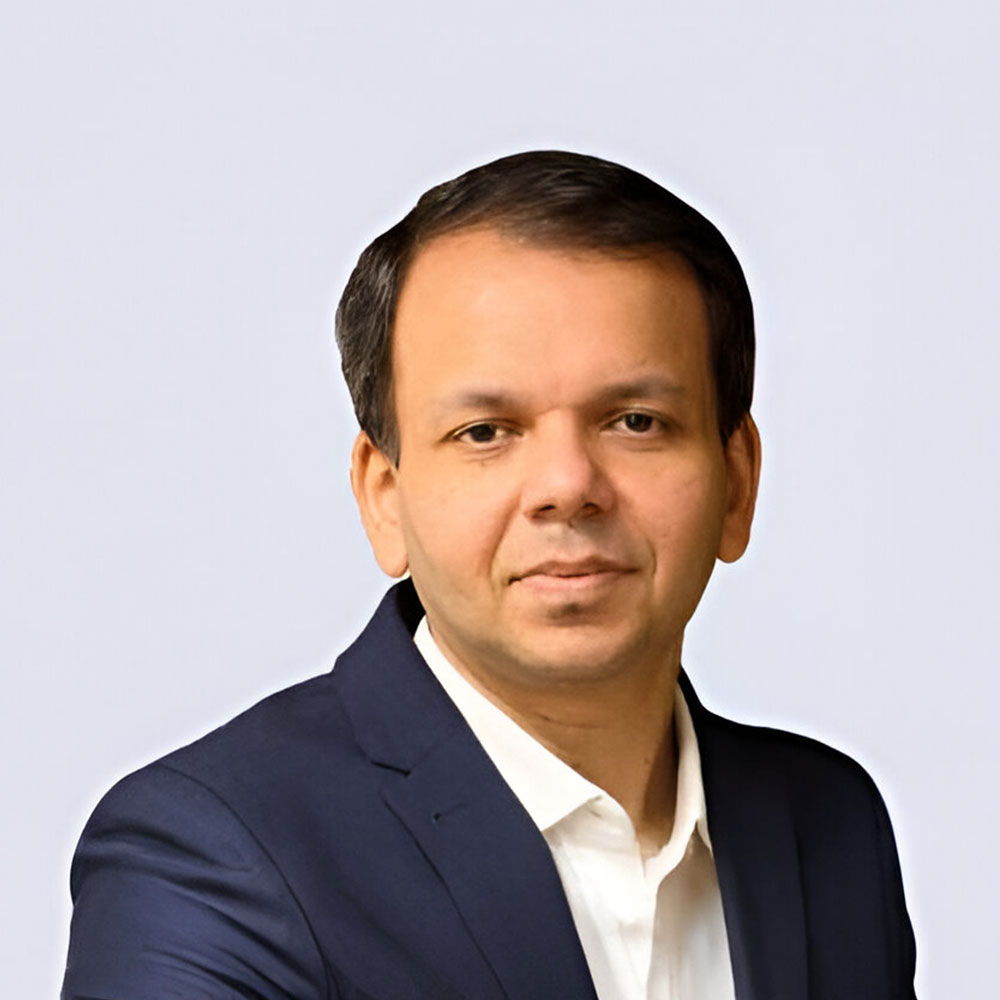
Mr. Rahul Pal
Chief Investment Officer - Fixed Income, Mahindra Manulife Mutual Fund
Mr. Rahul Pal is a Chartered Accountant. Prior to joining Mahindra Manulife Investment Management Private Limited, he was associated with Taurus Asset Management Company Limited as 'CIO - Fixed Income'. He has also worked with Sundaram Asset Management Company Limited as 'Fund Manager - Fixed Income'. In these roles, he was responsible for managing and overseeing the Fixed Income Portfolios.
Please note we have published the answers as it is received from the Fund Manager of Mahindra Manulife Mutual Fund.
Q1. The U.S. Federal Reserve recently cut rates by 25 bps, while the RBI chose to hold its policy rate steady at 5.5%. How do you interpret this policy divergence, and what implications does it have for capital flows, yield differentials, and the broader Indian debt markets?
Ans: The U.S. Federal Reserve's recent 25 bps rate cut, bringing the federal funds rate to 4.00-4.25%, marks a pivot toward accommodative policy amidst a softening labour market and political uncertainty due to the government shutdown. The RBI though held its repo rate steady at 5.5%, citing robust GDP growth (7.8% in Q1 FY26), benign inflation (1.54% in September), and maintained neutral stance.
This divergence reflects idiosyncratic domestic macro conditions:
-
Fed's cut aims to pre-empt labour market deterioration, support growth amidst fiscal challenges
-
RBI's pause signals confidence in India's growth trajectory and inflation containment, while presenting itself space for further policy accommodation.
Implications:
-
Capital Flows: A narrowing India-U.S. yield differential (now ~200-225 bps) reduces the relative attractiveness of Indian debt for foreign investors. This has already triggered FPI outflows from Indian bonds, particularly Fully Accessible Route (FAR) securities.
-
Currency Pressure: Reduced inflows may exert mild depreciation pressure on the INR, though India's FX reserves and trade resilience offer buffers.
-
Impact Domestic Debt Markets: The RBI's pause supports stability in short-term yields, while long-end yields may remain sticky due to global volatility and possible elevated commodity price pressure .However there have been recent news on possible challenges in US Credit market and should it have a contagion , the rush to safe heaven (possibly US treasuries) may trigger a likely RBI action.
Q2. With the Fed's rate cut signaling a potential shift in the global interest rate cycle, do you expect the RBI to follow suit in the coming quarters?
Ans: While the Fed's pivot suggests a global easing cycle, the RBI remains cautious. Its October policy emphasized domestic resilience, low inflation, and the need to allow full transmission of earlier rate cuts.
While a low benign inflation does open space for a possible rate action by the Monetary Policy Committee (MPC) of the RBI, we believe global risk off trades, should they materialize, may prompt the MPC for deeper cuts.
Q3. The RBI has revised its inflation projection for FY26 downward to 2.6% from 3.1%. How do you view this assessment - is the inflation trajectory comfortably within control, or are there still risks that could emerge?
Ans: The RBI's downward revision from 3.1% to 2.6% for FY26 reflects confidence in food price moderation, GST rationalisation, supply-side improvements, adequate rainfalls
Supportive Factors:
-
Record agricultural output and buffer stocks.
-
Negative food inflation in rural areas.
-
Core inflation largely contained, barring precious metals.
Risks to Watch:
-
Hard Commodities already inching up
-
Sticky services inflation and gold-driven core CPI.
-
Tariff-related supply chain disruptions.
-
A low food inflation may possibly mean lower incomes for Agriculture dependent households prompting a possible fiscal support to such households
Q4. Retail participation in debt mutual funds has been gradually rising again post-taxation changes. Are investors leaning towards short-term safety or long-term accrual strategies?
Ans: We believe debt mutual funds offer offers a diversification choice in terms of asset allocation, competitive returns vis traditional fixed income products and easy liquidity.
Investors, predominantly, are investing in debt mutual funds for various reasons: a volatile equity market resulting in a vehicle for temporary investments, as an asset diversifier and returns possibly higher than traditional fixed income products.
Q5. What are the key risk indicators you are monitoring for Indian debt markets over the next 6-12 months, and how resilient do you expect the market to be against potential shocks such as a sudden global rate spike or US Treasury yield volatility?
Ans: The key risk indicators for Indian Debt markets
-
The low inflation regime is predominantly due to low food inflation; Food inflation is a very difficult factor to forecast and the margin for errors may be large. As food inflation is almost 45% of the CPI basket, assuming a secularity in food inflation is a key risk marker.
-
Hard Commodities, copper and aluminum have been inching up, which may risk inflation on the higher side
-
Geo Political conditions, if they ease , may surprisingly also bring up inflation as war ravaged zones of Middle East and Ukraine bring about reconstruction efforts and possibly a commodity price pressure
-
While there are initial narratives on credit challenges in US, these challenges will be a one of the key markers
Q6. In this environment of global rate adjustments, currency pressure, and moderating inflation, what would be your preferred strategy for positioning debt portfolios - duration play, accrual focus, or a balanced approach?
Ans: We believe a balanced approach is a desirable option with a possible 60% focused towards accrual and the rest towards a duration focus.
Note: Views provided above are based on information in the public domain and subject to change. Investors are requested to consult their mutual fund distributor for any investment decisions.
MUTUAL FUND INVESTMENTS ARE SUBJECT TO MARKET RISKS, READ ALL SCHEME RELATED DOCUMENTS CAREFULLY
Imp.Note: We are registered NJ Wealth Partners and this interview published is sourced from NJ Wealth with due permissions. Reproduction of this interview/article/content in any form or medium by any means without prior written permissions of NJ India Invest Pvt. Ltd. is strictly prohibited.

